What do you think, when you hear that statement?
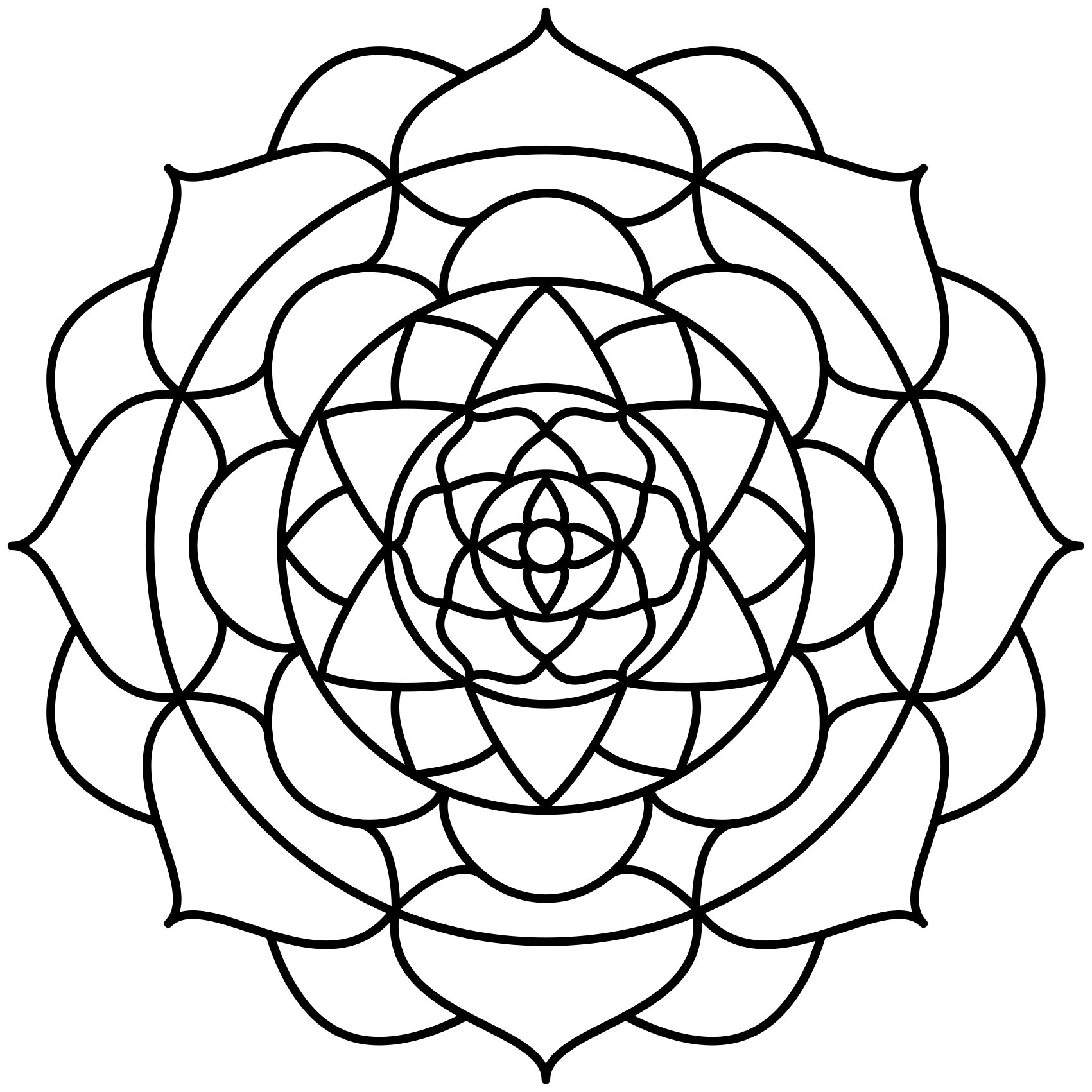
It is true that the mandala has great significance in both religions. In Hinduism and Buddhism, the mandala is used in connection with spiritual enlightenment – as a way to depict gods and demons. It’s a guide on our life journey from birth to death, through countless incarnations, with the challenges we must endure and overcome, as human beings, before we, once again, can reunite with the divine.
They remind us that we are part of something larger – not defined by religion, but by human experience.
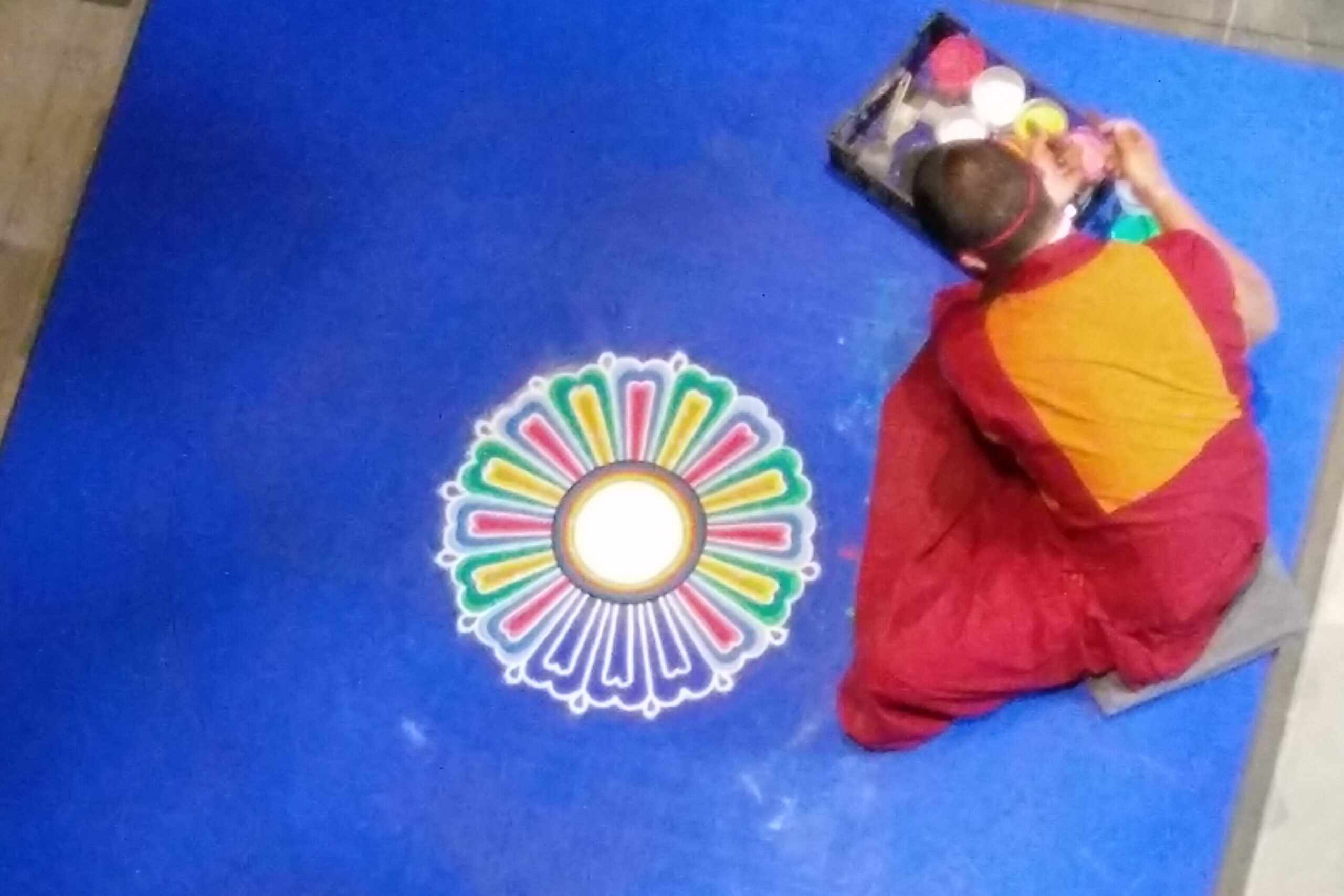
Buddhist monks have an entire ritual around the creation of a sand mandala. It is fascinating to see how they meticulously measure and sprinkle sand for several days, only to finally destroy it and pour it all into water. A beautiful image of creation and impermanence.
In a Western context, mandalas has also been uesed to convey messages that has a deep sense of connection. Just look at the Rose windows in Chathedrals and the work of great artists like Hildegaard Von Bingen, Hilma af Klint and Wassily Kadinsky.
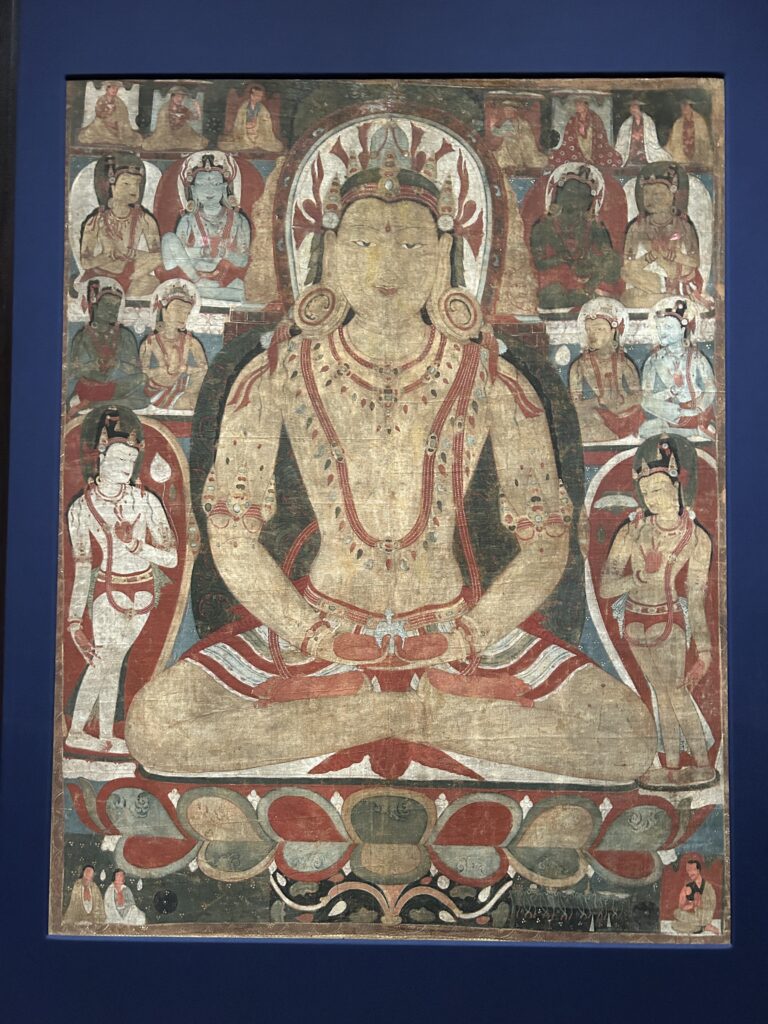
We often use mandalas when we want to signal peace, spirituality, and a connection to something spiritual. We find the mandalas intriguing, and they might convey much more, than what can be percieve be the eye. If you look at Buddhist mandalas, they are almost impossible for us to interpret without a thorough introduction to Buddhism. I was fortunate to experience the exhibition Mandalas, Mapping the Buddhist Art of Tibet in The MET, New York in 2024, where ancient mandalas were displayed alongside contemporary ones by Tenzing Rigdol. It was a magnificent experience, and the mandalas spoke to me in their own way, even if I did not fully understand the symbolism in the older ones. But the newer works resonated with the world we live in today. They felt relevant, alive, and deeply rootet in human nature.
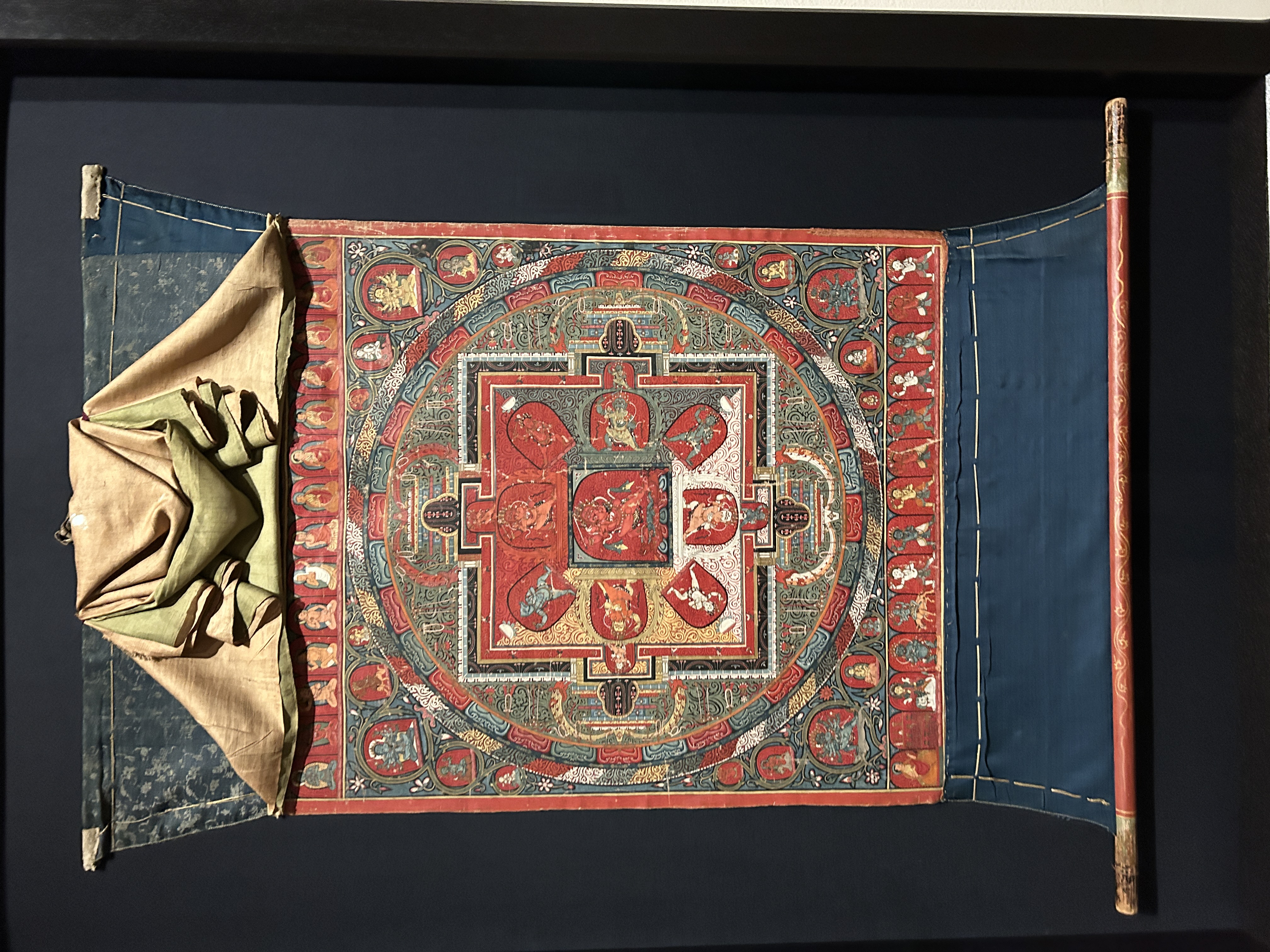
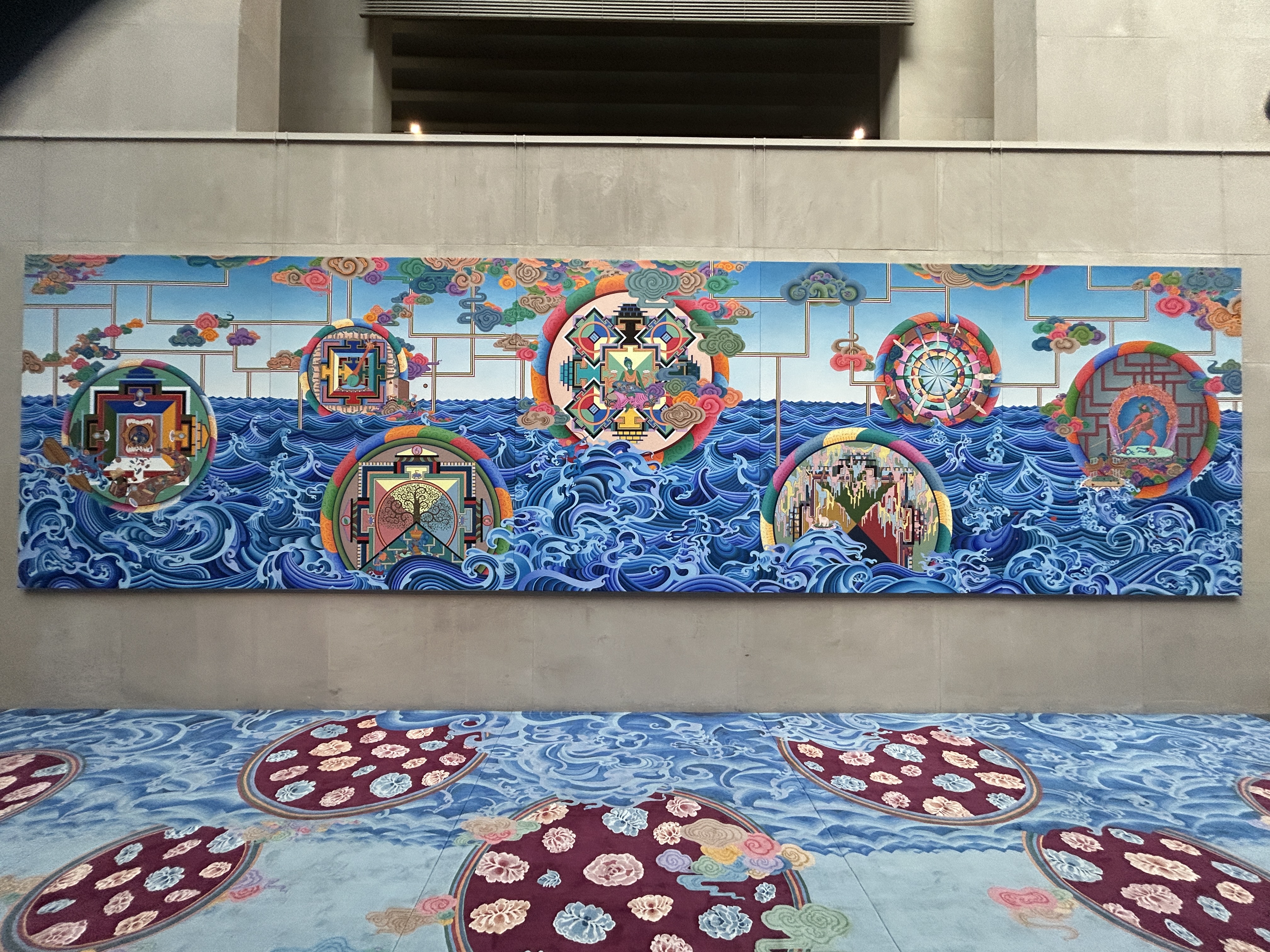
Some even claim that mandalas originated from what we in my part of the world refer to as eastern religions. But is that really the case?
The Circle: A universal Symbol
Since the dawn of time, the circle has held great significance for us. The circular forms of the Sun and Moon, and their circular dance across the sky, has fascinated us so much that we depicted them. Cave paintings have been found, dating back 75,000 years before our time1, indicating abstract thinking expressed in symbols. The transition from Neanderthals to Homo sapiens has been described as the leap where we developed the ability to see ourselves as individuals and think abstractly. However, evidence suggests that Neanderthals were “smarter” than we thought and were capable of abstract thought like Homo sapiens, meaning that expression has always been a part of our nature2
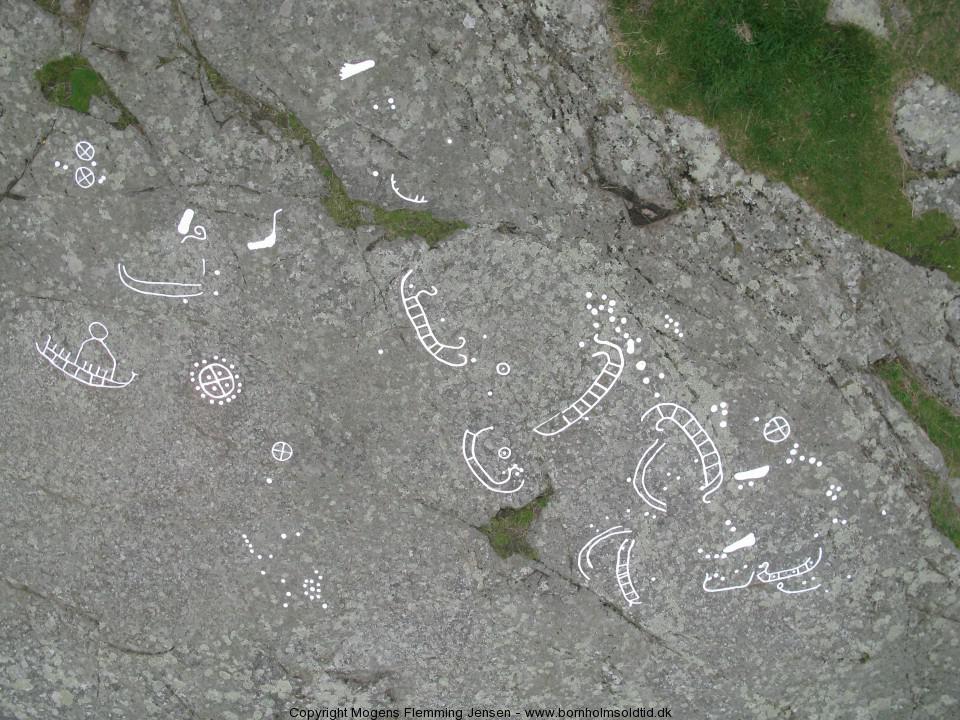
So what is it about the circle as a symbol, which seems to have arisen across time and geography? I don’t know, but I do know that the circle has been with us since the beginning of time in one form or another. Think about the egg being fertilized, our round eyes that from the very start observe the world, and how children begin to draw circles around the age of three and assign them meaning. This coincides with the childs discovery of themselves as an individual3.
How mandalas became my personal tool
I’ve started using mandalas in my own life as a way to make sense of challenges. Recently, I attended a course where we had to tell our story of origin (inspired by the bardo of becoming, from the Tibetan Book of the Dead), using pictures and artifacts. As always, my brain went into overdrive, taking the task in all sorts of directions. But by shaping the assignment in a mandala-like rather than linear form, it became clear how my life has unfolded in phases, and how my childhood continues to shape my future.
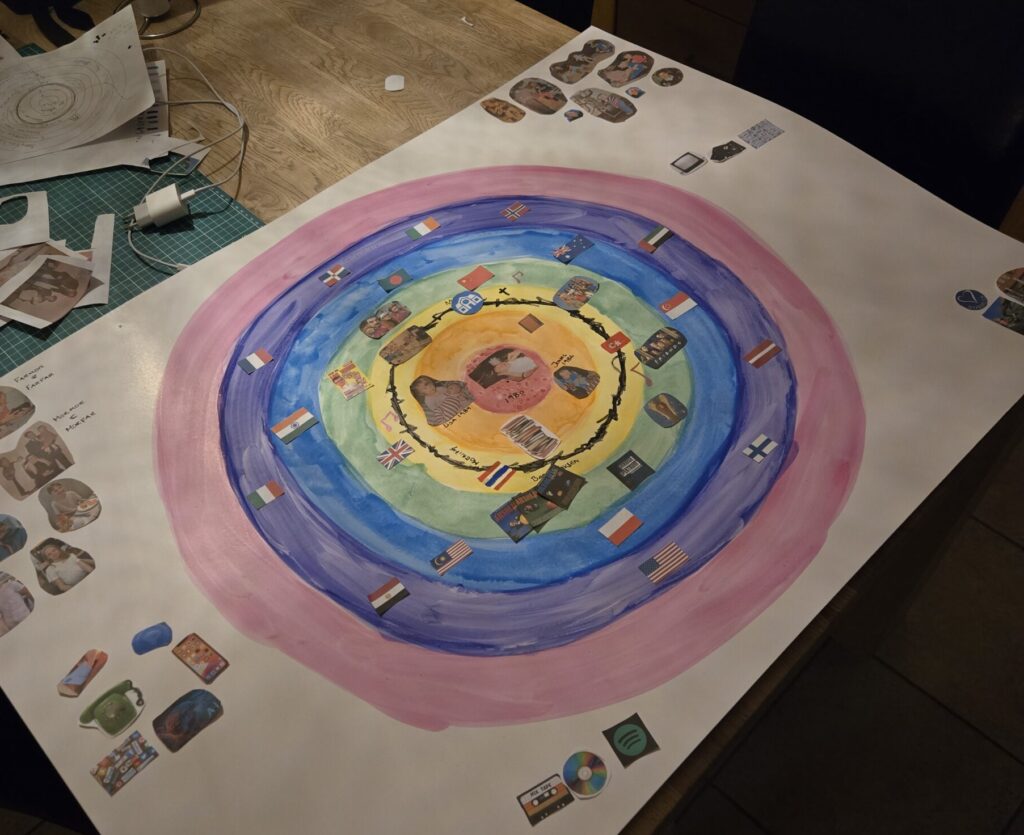
This experience reminded me that mandalas are not just religious symbols. They are universal tools for self-discovery, order, and healing.
I believe the circle is a universal symbol or tool that has a healing effect on us when we work with it in one way or another. It creates order out of chaos. It gives us an opportunity to gather ourselves, relate to what is around us, and gain a glimpse into a consciousness we are not yet aware of – something greater than ourselves. Or perhaps not greater, but a field we have forgotten we can access.
Why mandalas calm us
That is why coloring mandalas feels so calming, thats why our minds slip into a meditative state when we draw them, why they are beautiful to look at and why they open a a door to deeper awareness. They remind us that we are part of something larger – not defined by religion, but by human experience.
So NO! I definitely do not believe that mandalas are only for use within specific religious traditions. Rather, they are a universal tool that can unite us, develop us, and give us a shared understanding.
If you’d like to try how the mandala can work with you, sign up for my newsletter and be notified about upcoming courses.
- https://www.bradshawfoundation.com/geometric_signs/index.php ↩︎
- https://www.mpg.de/11948095/neandertals-cave-art ↩︎
- Susanne F. Fincher Coloring Mandalas,1st edition, 2000 ↩︎
Leave a Reply